


You feel healthy, have no symptoms and function fine. Yet certain conditions can develop for years without clear signs. As a result, they are regularly discovered only when damage has already occurred or treatment becomes more complex. A preventive research at Medical check-up helps to detect health risks and possible abnormalities at an early stage, even before symptoms develop. In this blog, you will read why some health problems stay under the radar for so long and what you can do to detect health risks in time.
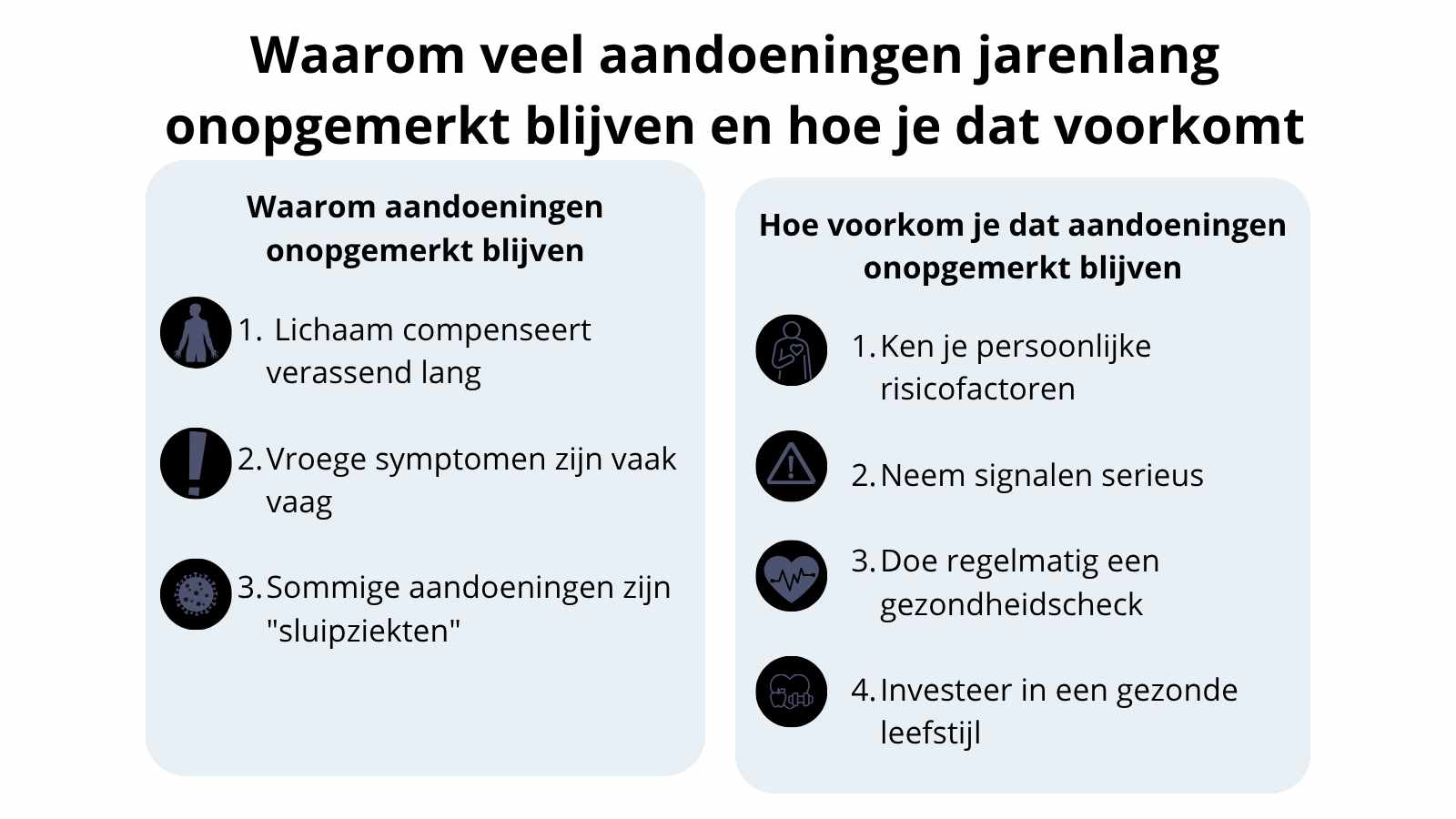
Why do disorders often go unnoticed?
1. The body compensates surprisingly long
Many organs have a large reserve capacity. As a result, the body can function for years while something goes wrong unnoticed. For example, kidney disease, cardiovascular problems or elevated blood sugar levels can develop slowly without you noticing it right away. It is only when the strain on the body becomes too great that symptoms such as fatigue, shortness of breath, dizziness or pain arise.
2. Early symptoms are often vague
When signs do appear, they are often attributed to stress, busyness or ageing. Think about:Fatigue Less energy Sleeping worse Reduced concentration Regular headaches Reduced fitness These symptoms seem harmless, which is why many people do not seek medical attention. Yet they can sometimes indicate underlying health problems.
3. Some conditions are real "sneaky diseases"
Certain conditions are known as silent diseases because they cause hardly any symptoms at an early stage. Examples include:High blood pressure Elevated cholesterol Type 2 diabetes Chronic kidney diseases Some forms of cancer Developing cardiovascular diseases This is precisely why preventive healthcare increasingly important.
Who is at extra risk?
Although anyone can develop health problems, there are factors that increase the risk: Age over 40 Hereditary strain within the family Overweight Smoking High workload or chronic stress Little movement Unhealthy food Excessive alcohol consumption When several of these factors are present, the likelihood of hidden health problems increases significantly.
How do you prevent disorders from being hidden for years?
1. Know your personal risk factors
Many people do not know what diseases run in their families. Yet family history provides important information about your health risks. Therefore, regularly discuss with family members which diseases are more common in the family.
2. Take signals seriously
Don't linger too long with symptoms that persist or recur. Even when symptoms seem mild, it may be wise to get a medical check to be implemented.
3. Do regular health checks
Because many conditions do not cause obvious symptoms, measurements and tests can often detect abnormalities earlier than you notice yourself. A medical check can provide insight into, among other things: Blood pressure Cholesterol levels Blood sugar Cardiac function Lung function Kidney function General physical health Identifying potential anomalies early often creates more scope for timely intervention.
4. Invest in a healthy lifestyle
Prevention remains the most powerful way to reduce health risks.A healthy lifestyle consists of: Regular exercise Healthy food Sufficient sleep No smoking Moderate alcohol consumption Effective stress management Even small improvements can make a big difference to your health in the long run.
Early detection often makes the difference
Many serious conditions do not develop overnight. They develop gradually and often show clear signs late. Therefore, waiting for symptoms is not always the best strategy. Those who have their health regularly evaluated not only gain more insight, but also more opportunities to take timely action. And with health, the earlier you are there, the greater the chances of success. Wondering how your health is doing? Check out the different screening packages or take contact on with Medical Check-up.
Make an appointment today
Don't wait any longer to take good care of yourself or your employees. Make an appointment today for a comprehensive medical check-up and take the first step towards a healthier life.
Do an online check-upMake an appointment
